The Medium is the Message: An exhibition at The College of Psychic Studies (open 9th October 2025-31 to January 2026)
By Sarah Dutson
The College of Psychic Studies is hosting a major exhibition of spiritualist art, gathering work by more than thirty artists who have explored the spirit world from the mid nineteenth century to the present. Thanks to funding from the Manchester Centre for Gothic Studies, I was able to visit the exhibition and explore the connection between artistic practice and spirit communication.
This theme aligns closely with my research on spiritualist mediums in neo-Victorian literature, particularly the recurring fascination with the female medium. Victorian spiritualism has seen a striking revival in contemporary Gothic writing, and this exhibition promised to shed light on that renewed interest. It also offered a rare chance to see work by female practitioners who have often been overlooked in traditional histories. I already knew the work of spiritualist artists Hilma af Klint and Georgiana Houghton through Jennifer Higgie’s The Other Side: A Journey into Women, Art and the Spirit World (2023). However, many of the names on the exhibition list were unfamiliar. This felt like the perfect opportunity to discover current research on restoring these women to the historical record.
The exhibition is housed in the College’s historic home at 16 Queensberry Place in South Kensington, where the organisation moved in 1925. Stepping inside feels like entering another world, elegant and quiet and unmistakably expensive. The exhibition spans four floors of a white fronted, traditional nineteenth-century townhouse. It evokes the atmosphere of an exclusive Victorian members club. After pressing the buzzer, the front door opens into a reference library of rare and contemporary books; its walls filled with high bookcases, dark wood, leather chairs and a traditional fireplace.
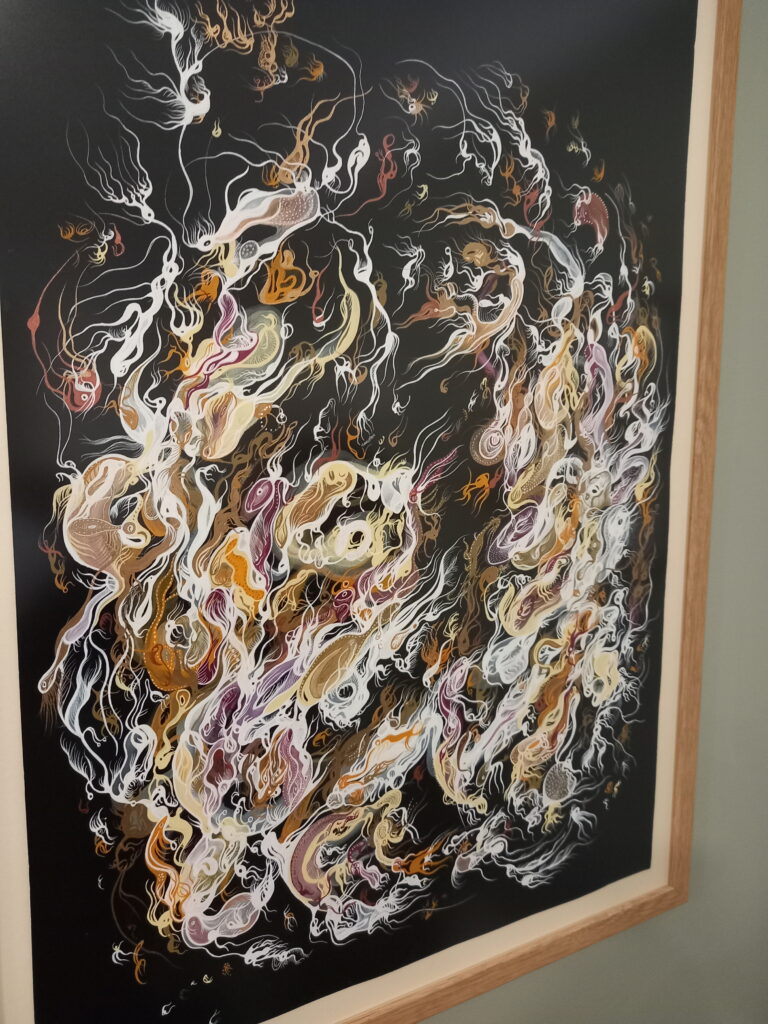
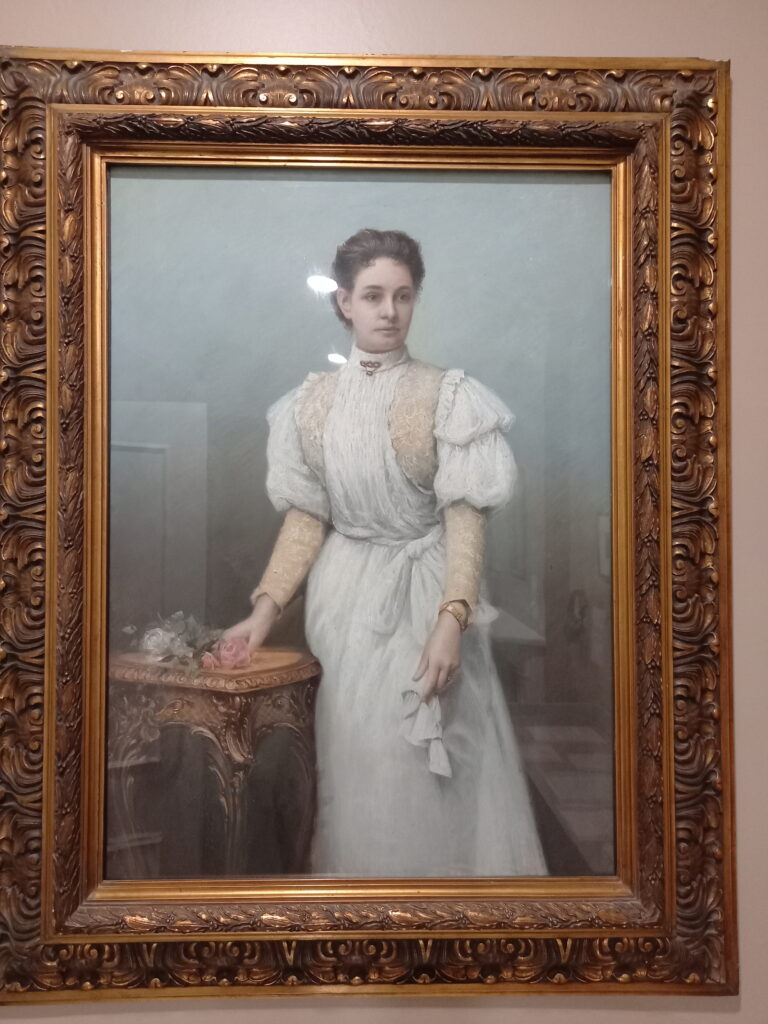
With more than one hundred artworks on display, we were advised to begin on the top floor and walk down. The exhibition gathers more than thirty artists from the mid nineteenth-century to the present day. One contemporary highlight for me was Cara MacWilliam’s Courting of the Glistening Veil (2024), a striking work full of movement and spiritual intensity. It was created on the eve of Samhain, as she prepared a silent supper ritual to commune with ancestral spirits. The sense of a boundary between worlds was beautifully realised. My principal focus, however, was the nineteenth-century material. I was especially drawn to the painted portrait of Madame d’Esperance from around 1900, which features the flowers she famously materialised during séances, recorded in her spiritualist memoir Shadow Land, or, Light from the Other Side (1897).
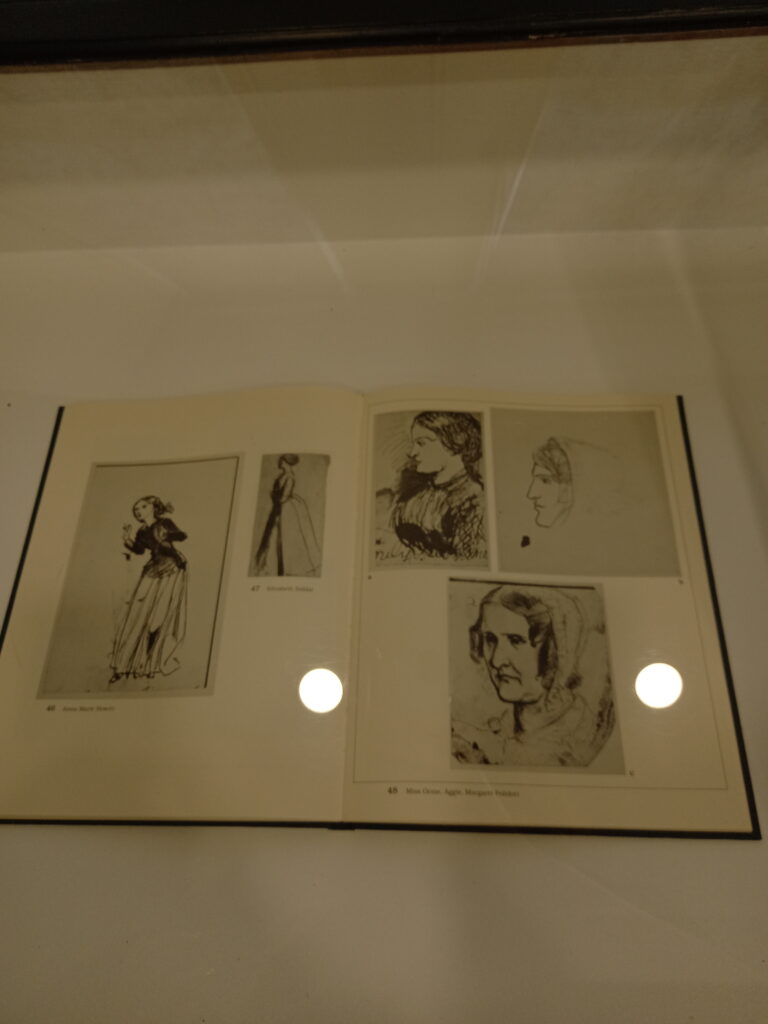
I was thrilled to discover the work of Anna Mary Howitt Watts, a founding member of the London Spiritualist Alliance which later became the College of Psychic Studies. This is the largest exhibition of her work to date. She was closely connected to Dante Gabriel Rossetti, and the exhibition includes a portrait he made of her, together with a moving drawing of Elizabeth Siddal completed by Howitt Watts. Despite studying with Rossetti and moving within the wider Pre Raphaelite circle, but as a woman Howitt Watts was excluded from the famous Brotherhood. Reflecting the exclusionary experience many women had in the nineteenth-century art world, she wrote about the lack of recognition afforded to women artists, whom she described as her ‘Sisters in Art’. Even so, her work remained aligned with the Pre Raphaelite movement and she contributed to Rossetti’s Folio Club. She was also part of pioneering feminist groups in London in the 1850s, including the Langham Place Group, one of Britain’s earliest organised movements for women’s rights. The work of Howitt Watts illuminates the lives of nineteenth-century women artists and writers and helps us to understand our connection with them today. They form a powerful lineage of female creativity.
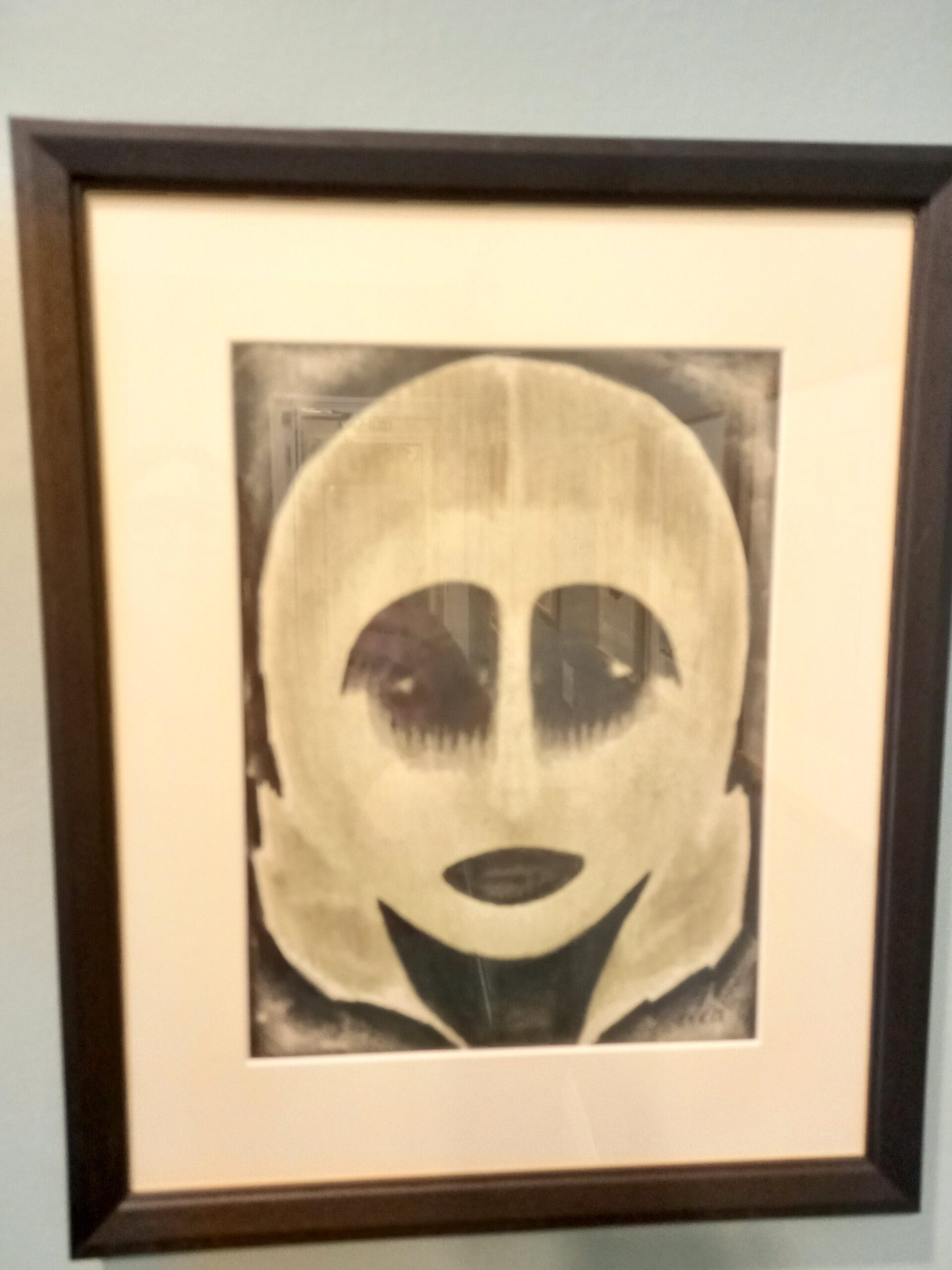
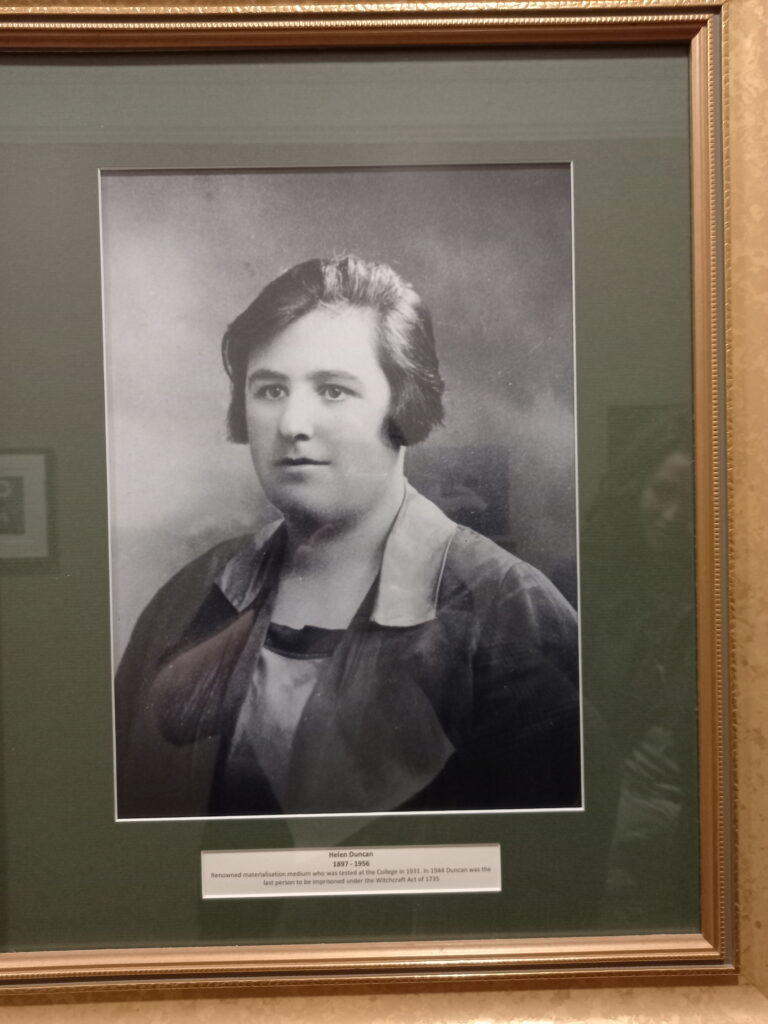
One of the most haunting pieces is an automatic drawing by Aleksandra Ionowa titled H P Blavatsky (1952), a coloured pencil portrait of the founder of the Theosophical movement. Ionowa did not see herself simply as a vessel for spirits; she believed she collaborated with the spirit world. She and her circle even believed she was the reincarnation of Blavatsky. There is something compelling here about women reaching across time to form relationships with their predecessors that I have found echoed in my research. The photographs of Helen Duncan (1897-1956) were equally powerful. Underneath them we are told of how she was investigated in this very building by Harry Price in 1931. It is difficult not to feel distressed by the methods used to try to expose her as a fraud, and by the reminder that she became the last person imprisoned under the Witchcraft Act of 1735.
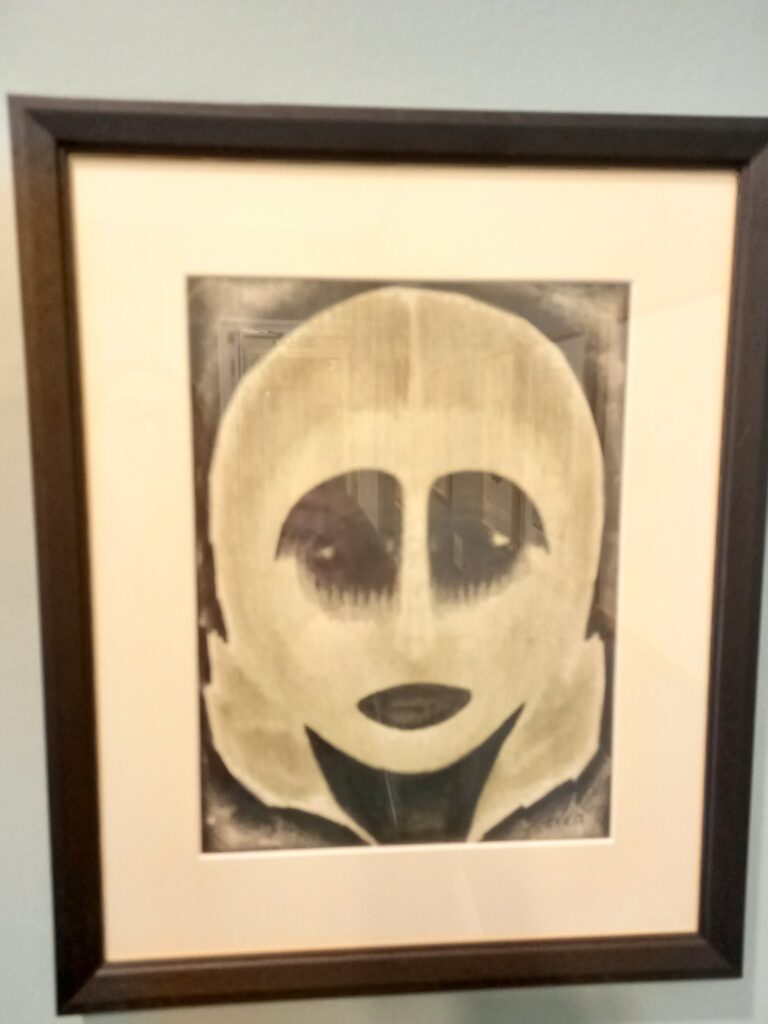
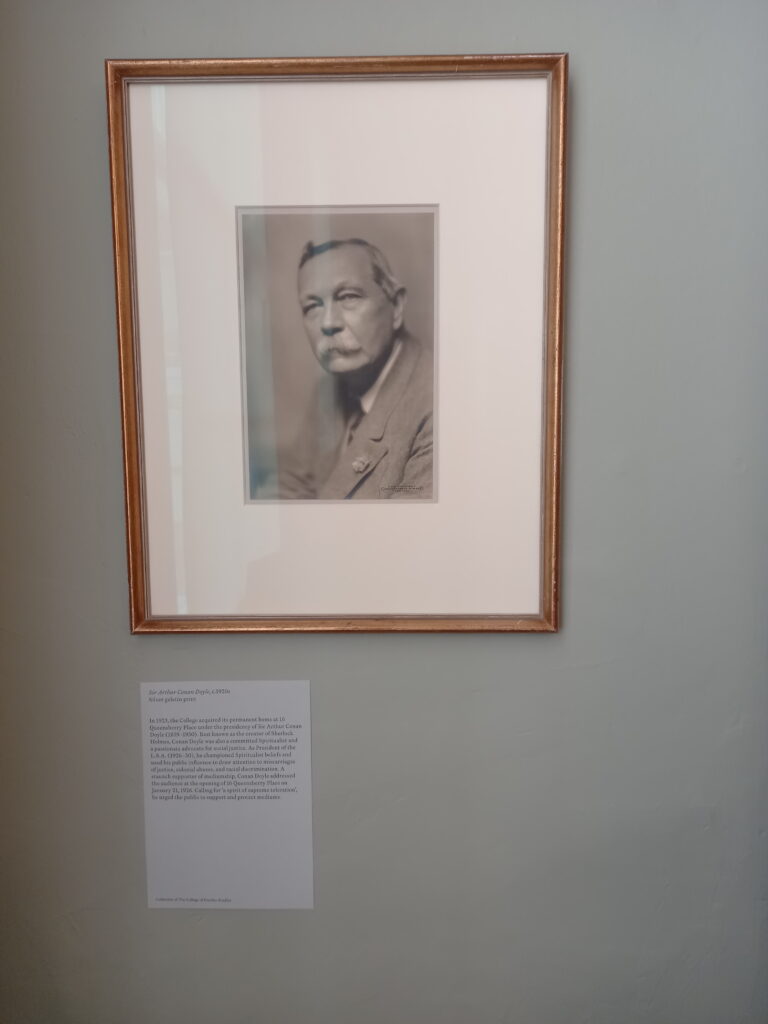
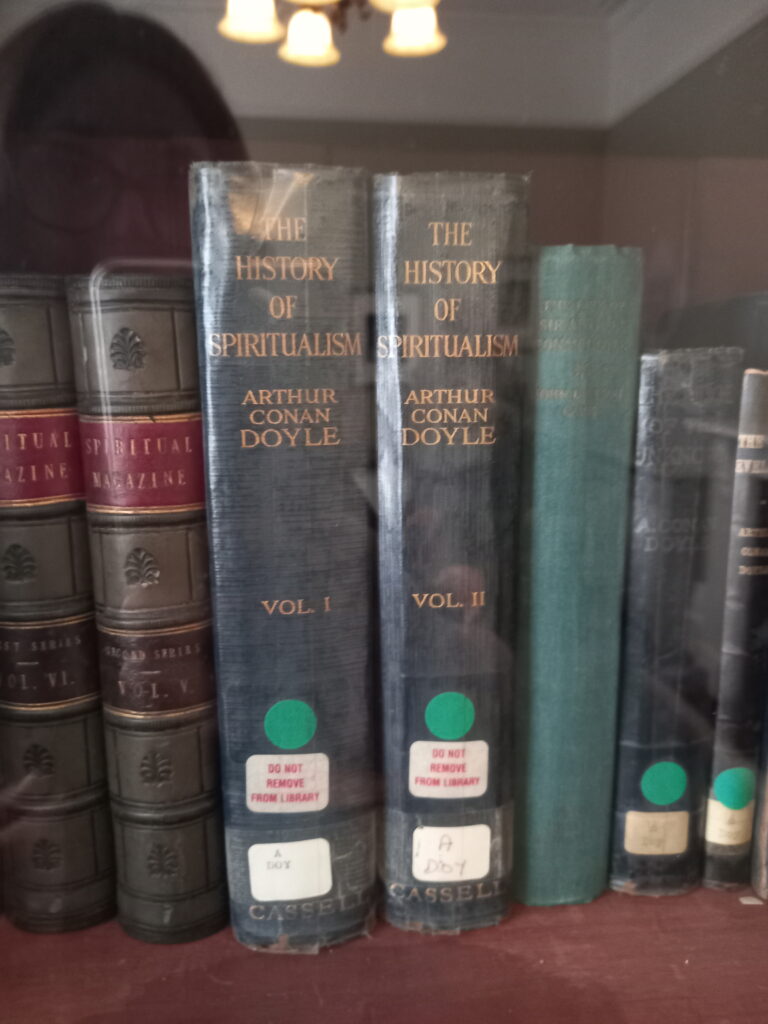
I left the exhibition reflecting on the many ways women have been silenced in history, and on the strong matriarchal chain visible in the work of these female artists and mediums. There is still much to uncover in the history of spiritualism. A single display devoted to Arthur Conan Doyle sits quietly in one corner. His contribution is well known, but this exhibition shows that the story is far broader, and far more female, than traditional history has allowed.
Sarah Dutson is a PhD candidate at Manchester Metropolitan University, where she recently completed her MA in Gothic Studies. Her research interests include women’s writing and the supernatural, with a particular focus on spiritualism and the occult in neo-Victorian women’s Gothic fiction. Sarah’s current research examines the figure of the female medium, exploring how neo-Victorian Gothic novels by women writers use this character to reflect and interrogate the position of women in society. Her PhD thesis is titled: ‘Spiritualism was triumphant’: The Legacy of Spiritualism as a Feminist Counternarrative to Patriarchy in Neo-Victorian Gothic Fiction 2010 to 2025.