Women In Horror: Amy Jane Stewart and Heidi Hinda Chadwick
A review of a horror ‘in conversation’ event at Blackwell’s, Manchester, by our visiting research student Paula Garcia (University of Malaga)
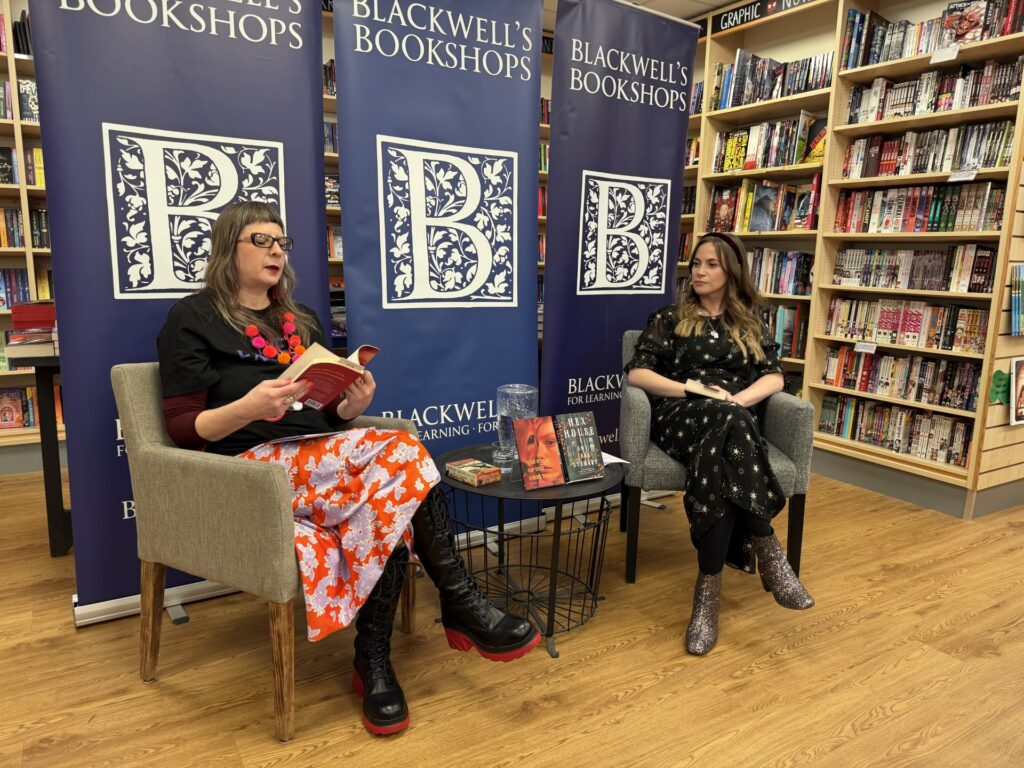
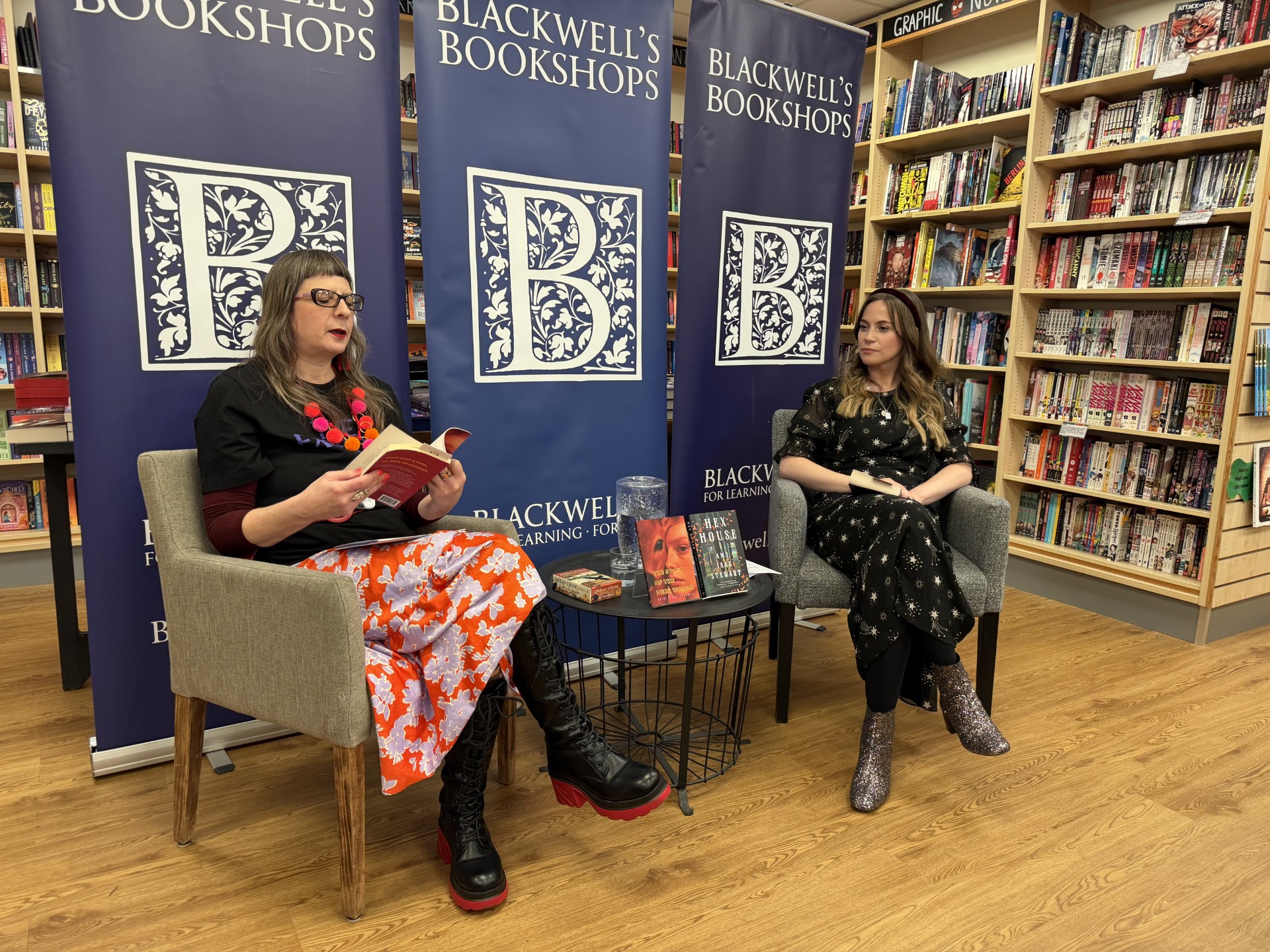
On Thursday 5 November, we gathered once again at Blackwell’s Bookshop, in Manchester. On this occasion, our hosts were Amy Jane Stewart—author of Hex House, her debut novel, winner of the New Writing North & Word Factory Northern Apprentice Award in 2021 and PhD student at the University of Sheffield—and Heidi Hinda Chadwick—author of The Story of the Deer Woman, as well as short stories, novellas and essays, and a performer, educator and artist. They were discussing the role of women in the horror genre, the pressures they face and their fascination, as writers, in bodily transformations. The chemistry between the two authors was undeniable. This allowed the conversation to flow naturally and take on an engaging and evocative tone.
The conversation inevitably began by addressing the relationship between the female body and the horror genre. Both authors discussed their experiences of bodily changes throughout their lives, using motherhood and the menopause as examples. Stewart, for instance, noted how strange it feels to inhabit a body that is constantly changing, often beyond her own control. They both agreed that experiences such as the ageing of the body, hormonal changes and the physical transformations experienced at different stages of life constantly remind us of the physical discomforts that accompany the realities of inhabiting a female body. For this reason, according to both Chadwick and Stewart, body horror offers so many possibilities for the genre, and especially for female writers. Body horror allows for the experiences that form part of many women’s lives to be voiced. In the face of the social and cultural constraints placed on the female body, the authors presented horror as a way of liberation from pain and restrictions.
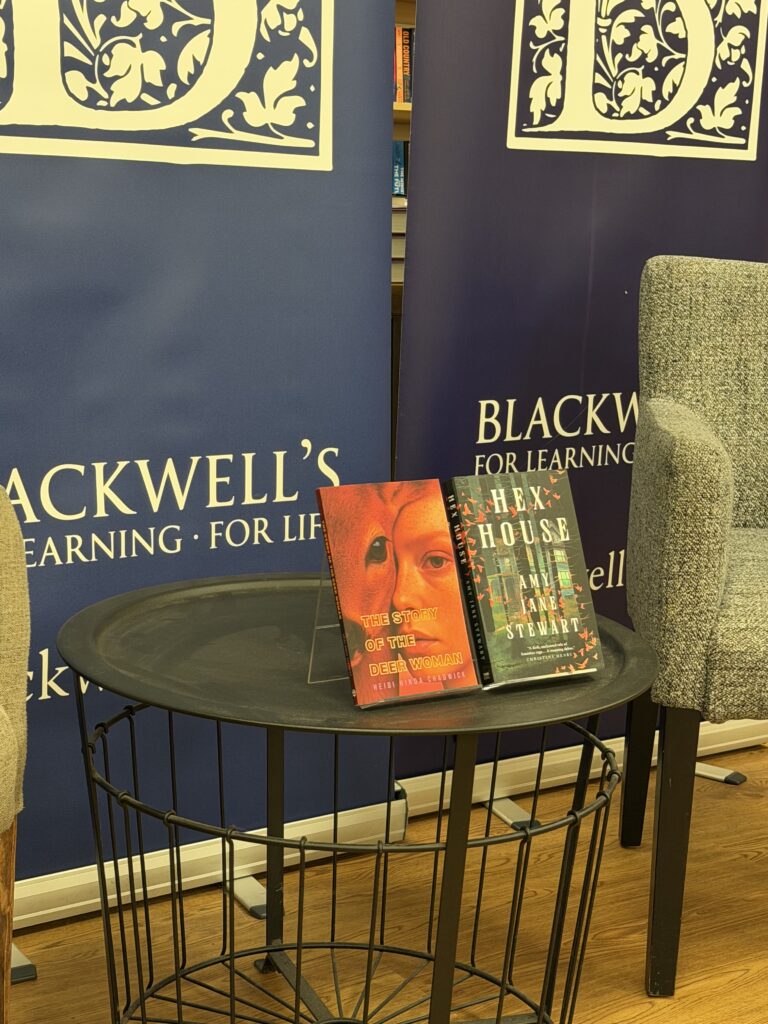
Body transformations, then, led to the following topic of conversation: the fascination with animals and the possibilities that animal transformations offer for breaking free from the boundaries of the body. Stewart began by noting that these animal transformations find their place in Hex House, with the presence of figures such as crows, deer and hags. She also pointed out that part of her interest in these animal transformations stems from how animals do not need to worry about social conventions, as humans do. Animals do not need to be polite, say thank you or apologise, nor do they need to cross their legs when sitting to occupy less space. Animals follow their instincts. And for this reason, the idea of animal transformation offers an alternative for women writers. Chadwick contributed to the debate by sharing some of her experiences with shamanism workshops and somatic practices in Spain. During her time in the country, she explored animal archetypes and figures such as the Cailleach. With this, the conversation turned towards witches and other female figures who occupy uncomfortable positions in the popular imagination.
Perhaps one of the aspects I found most interesting during the discussion was how both authors addressed the pleasure of writing female characters who are not necessarily likeable, characters who defy social expectations. Both authors discussed the satisfaction and freedom they find in creating female characters who are difficult, angry and even selfish. In addition, they stressed how good it feels that, in their writing, there is no need to ask permission or follow specific rules. Their words allow them to portray certain experiences that are part of women’s everyday lives without having to suppress everything that, supposedly, they ought not to feel. They did admit, however, that, at times, they wondered when it was too much, and how far they could push it before the audience was put off. However, the influence of other women writers who do push the boundaries—who do go to extremes that were, at first, unimaginable, unattainable to them—has inspired them to push those boundaries a step further. As expected, that led to a broader conversation about the influences and works that inspired their own writing. Referring to works such as Angela Carter’s The Bloody Chamber, both authors discussed how this blend of horror and fairy tale allows real fears to be explored in a way that is both metaphorical and subversive.
There was also room to discuss geographical settings and haunted places. Both authors discussed how the places where they grew up and have lived have affected their stories. Stewart spoke of Edinburgh as the city of her life, describing it as teeming with narrow alleyways and ghost stories. Chadwick, on the other hand, spoke of Manchester, its industrial landscape and its working-class heritage. And, although Manchester lacks Edinburgh’s Gothic tradition, Chadwick referred to tunnels and hidden spaces in the city, thereby offering a new perspective. Thus, whilst taking different approaches, both authors made clear the importance of the places we inhabit and how these have influenced their writing processes.
A game centred on the tarot cards prepared by Blackwell brought the conversation to a close, with one final—but powerful—reflection: are women expected to share their vulnerability and pain more openly through their writing, while the same is not expected or required of men? Does this make women better writers? Or, on the contrary, does it force them to work harder to be taken seriously? Faced with these questions, both authors agreed that there is, indeed, a kind of expectation that women should write autofiction linked to trauma, in a way that is not demanded of male authors, who are praised for their imagination, while women are expected to draw on their own lives.
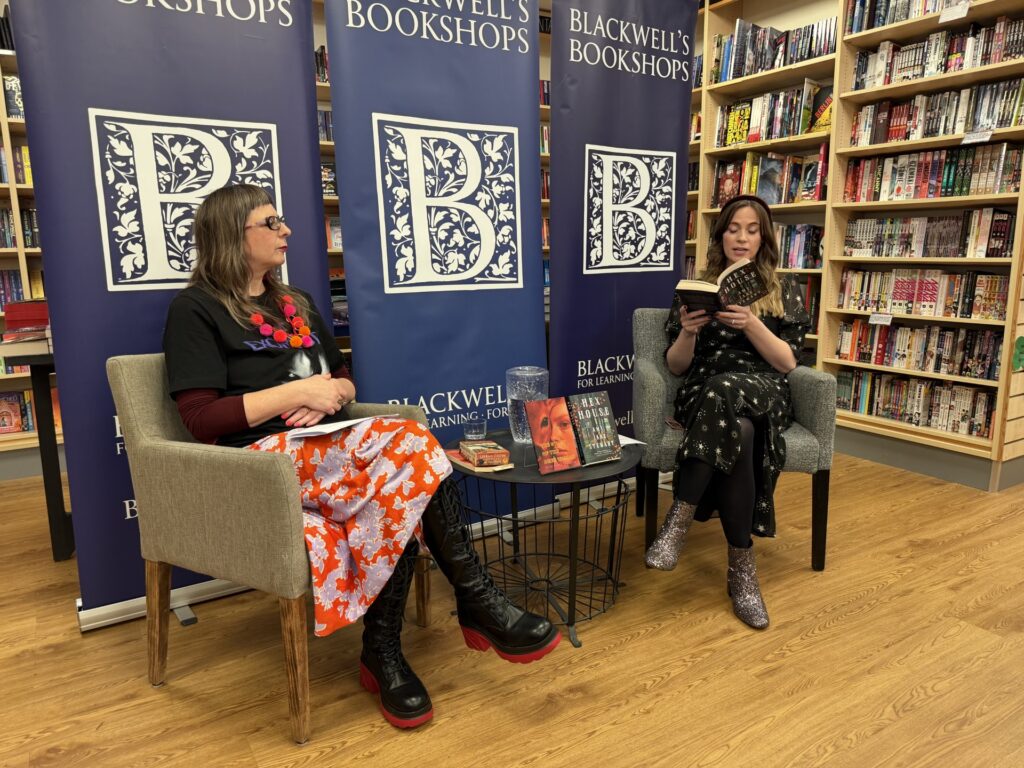
/Despite the seriousness of the matter, the conversation ended in laughter and, above all, in reflections on the weight, the demands and the liberating power of writing from a place of pain. The conversation thus became a true celebration of imperfection, of metamorphosis, of literary catharsis and, overall, of the pleasure of stepping into the wild and challenging expectations.