A review of a Halloween Blackwell’s event by visiting research student Paula Garcia (University of Malaga)
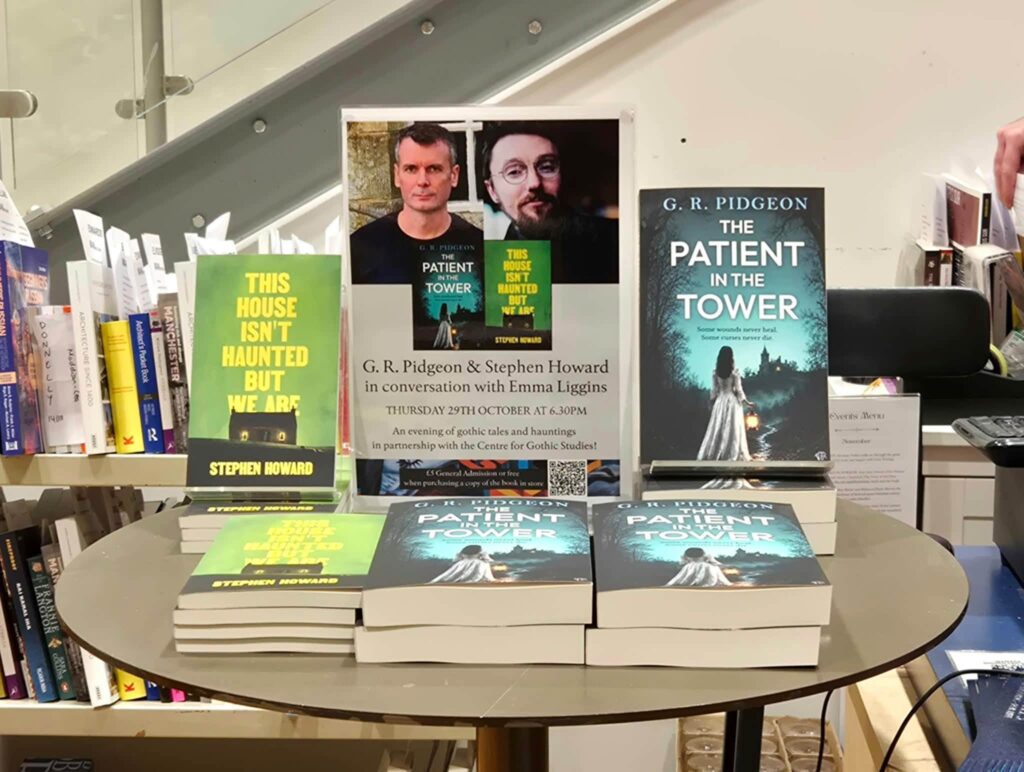
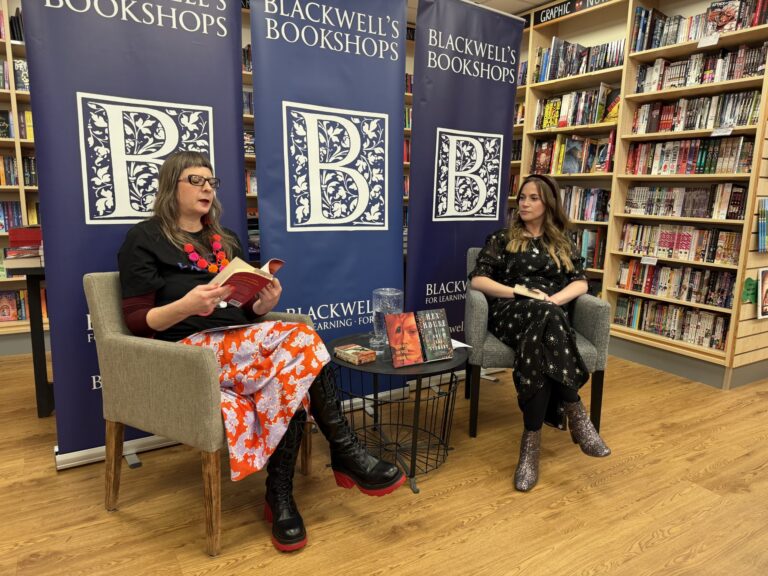
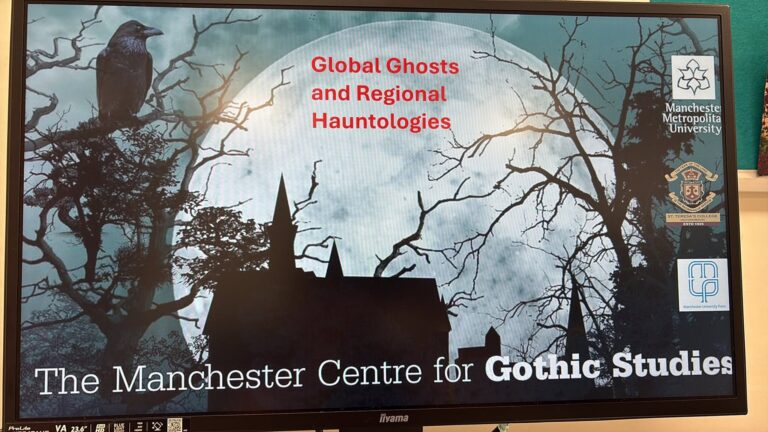
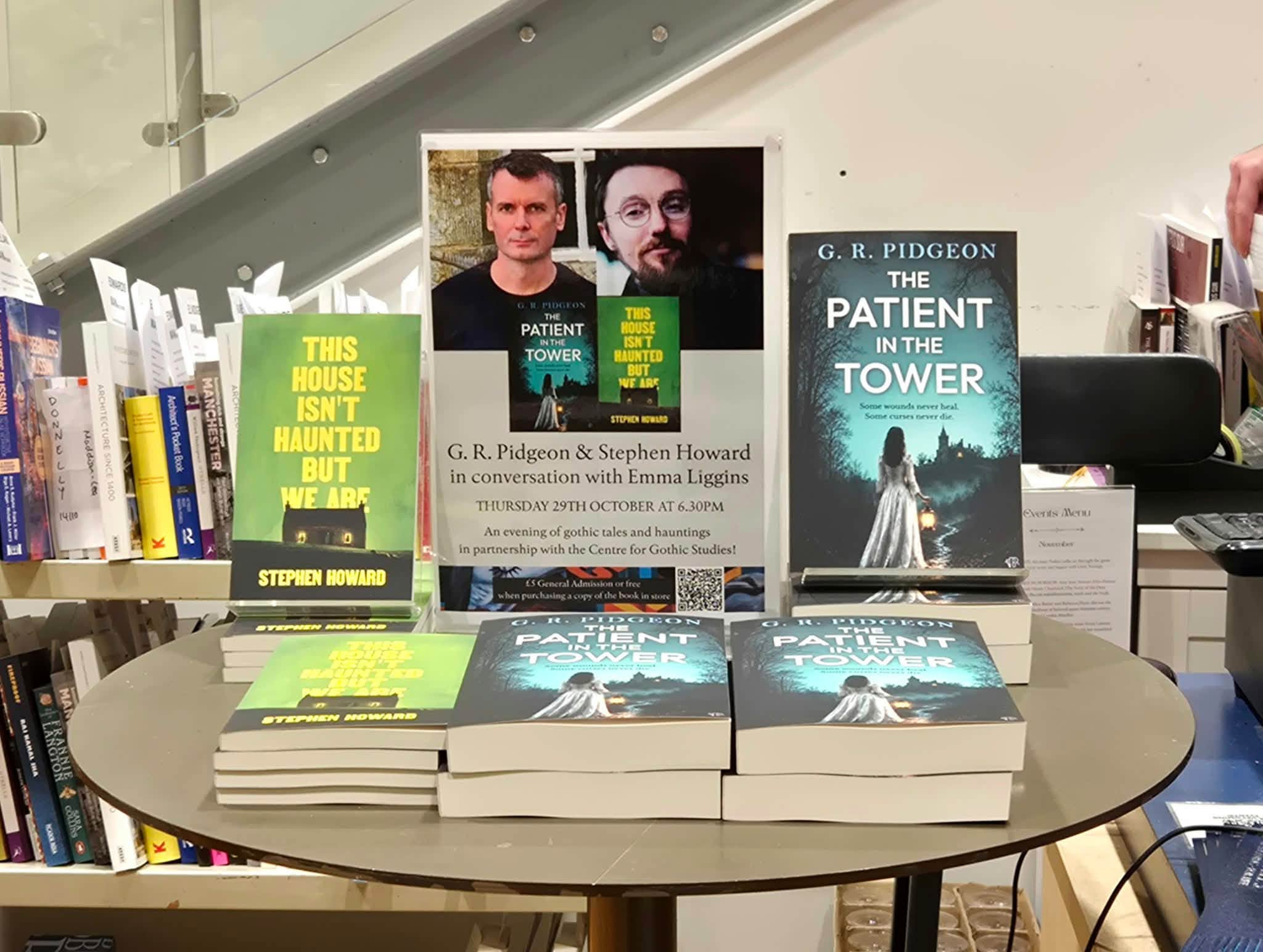
There is something special about spending an afternoon discussing Gothic fiction in a bookshop during Halloween week. On Thursday, 29 October 2026, we had the pleasure of gathering around shelves full of stories at Blackwell’s, on Oxford Road. The occasion certainly called for it. We were welcomed by Emma Liggins, from the Manchester Centre for Gothic Studies, who chaired a discussion with Stephen Howard and Graham Pidgeon, two authors who had come to spend their Thursday afternoon sharing their books—This House Isn’t Haunted but We Are, and The Patient in the Tower, respectively—and discussing their different approaches to Gothic fiction. The discussion covered various aspects and perspectives on Gothic fiction, ranging from each author’s influences to a somewhat more personal conversation about grief, mourning and loss.
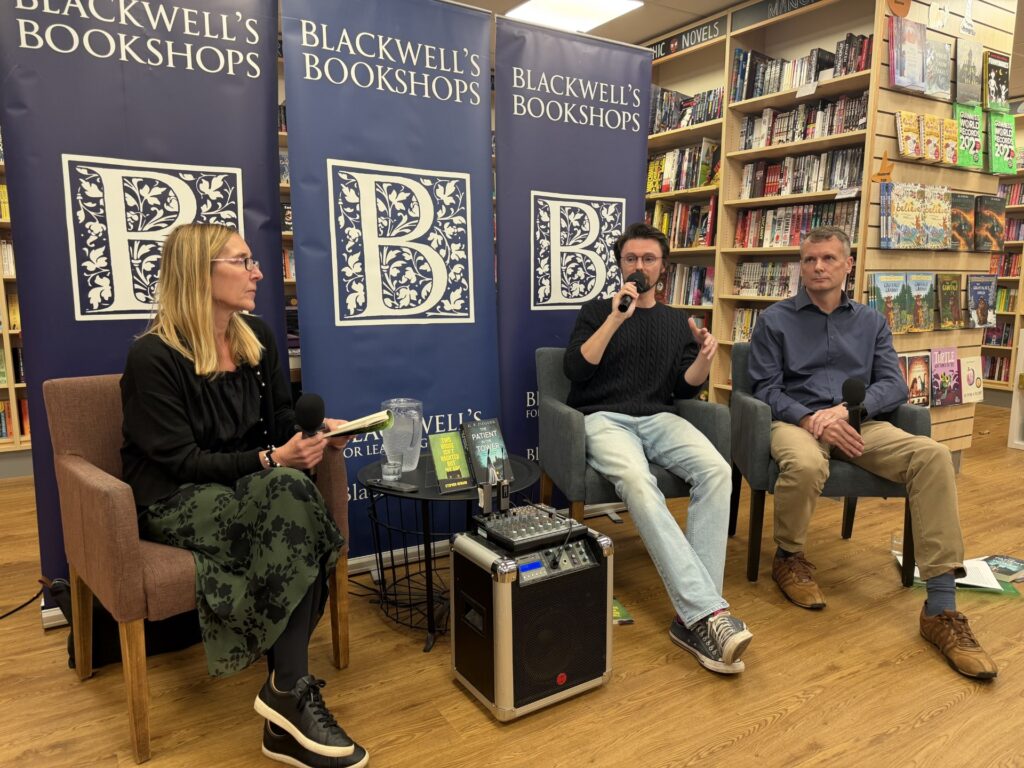
The first part of the conversation let me appreciate—amongst many other things—how the Gothic continues to evolve without losing sight of its origins. This struck me particularly when both authors mentioned their literary influences, and titles such as Wuthering Heights and The Woman in White came up. Although their works and their approaches to the Gothic seemed to differ, both recognised the importance of those stories that helped to define the genre and their own artistic development.
The discussion then turned to the importance of setting and spaces in Gothic fiction. And, of course, this was no less important in Howard and Pidgeon’s works. Even though the two stories were so different from one another, their settings had in common the fact that the spaces were not merely passive backdrops against which the stories unfolded. Instead, both stories created spaces that hold memories and, indeed, could influence and shape the narratives.
The Patient in the Tower is set in a real location in the Surrey Hills. During the conversation, Pidgeon mentioned how he really enjoys including his immediate surroundings into his work, particularly the areas where Kent, Sussex and Surrey meet. The Patient begins just after the First World War, with a narrator who refused to fight and spent the war in solitary confinement at Dartmoor. The claustrophobia of spending four years in a cell under the constant uncertainty of being executed, is in itself a Gothic condition. The enclosed space is the haunting before any ghost shows up. It is also interesting to consider how the forest, which is often interpreted as a place of freedom, ends up failing to offer that relief to the narrator, and instead, in a world utterly devastated by war, it becomes just another place filled with uncertainty.
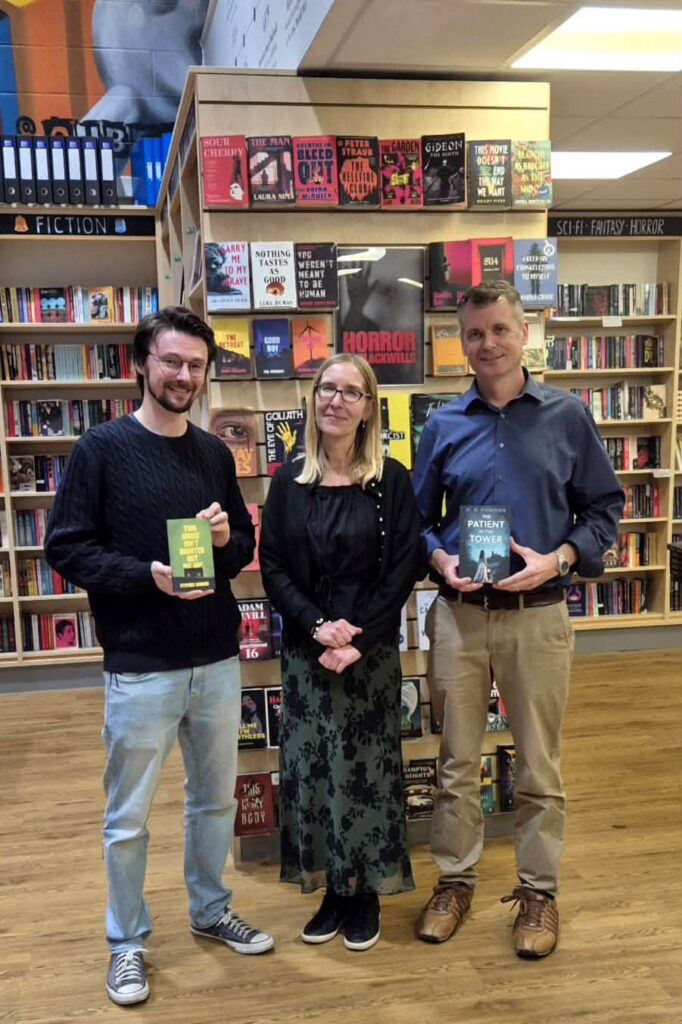
This House Isn’t Haunted but We Are comes from a more personal perspective. The author spoke of childhood memories and summers in North Yorkshire, and the contrast between its landscapes and the urban environment of Manchester. He explained how feeling small within the immensity of the countryside gave rise to his interest in cosmic horror. In his view, there is something unsettling about being surrounded by a world so immense that it seems to have little regard for human existence. Regarding his work, Howard further described the haunted house as a character in its own right. As opposed to being simply a structure that shelters those who live within it, for the author, this house accumulates memories, influences its inhabitants and even, at times, retains what those inhabitants would prefer to leave behind, haunting them.
What interested me most about the conversation, and what brought these two stories together, was undoubtedly the theme of grief. Emma used the term “grief horror” to describe this aspect of horror that arises from loss, from the difficulty of moving on. In my view, this is certainly an accurate way of referring to both stories. Trauma manifests itself differently in The Patient and in This House Isn’t Haunted—the trauma of war and the loss of a child—but both works seem to revolve around the same central theme: how can one go on living with something that simply cannot be fixed? At this point, Pidgeon referred to how difficult it is for him even to imagine losing a son in the war—an idea that haunts him, despite how distant this situation is from his own experience—and which, in some way, has influenced his approach to writing.
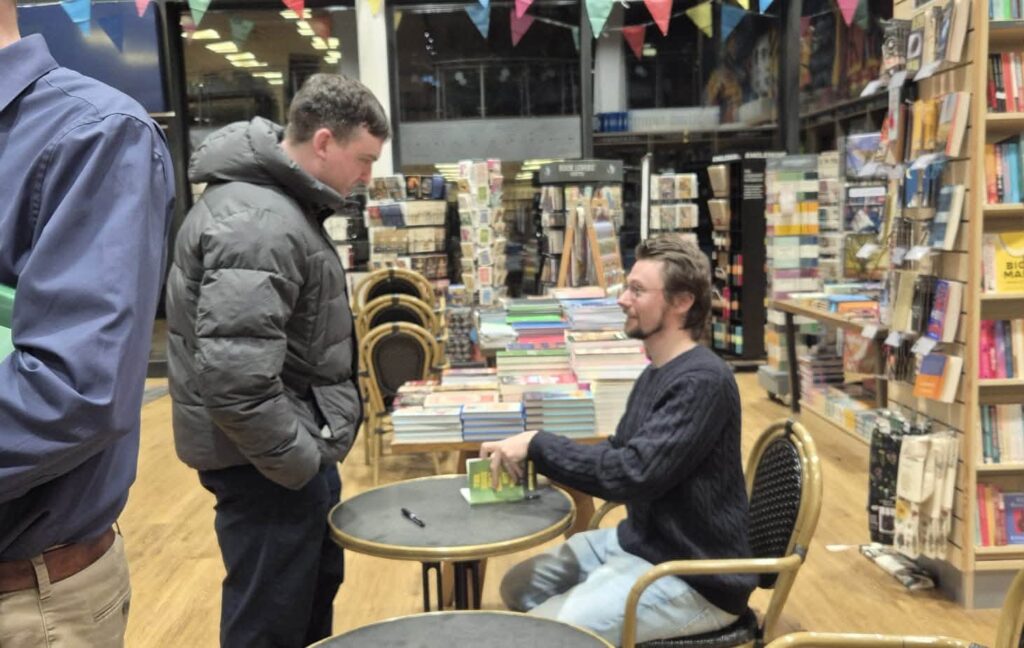
Howard, in turn, discussed how grief manifests itself differently in his characters. His two protagonists must face the horror of losing a child, but each responds to grief in a different way. Whilst Simon tries to repair something that is impossible—convincing himself that he is caught up in a ghost story—Priya tries to leave behind something that is gone, even though it keeps coming back, reminding her that there are things you cannot make disappear, no matter how much you wish to ignore them. The difference between these two characters, between their two perspectives, strikes me as both deeply human and deeply frightening. Neither of these two responses seem quite right, neither seem enough. But is there even a right way to overcome—or live with—grief?
Despite the emotional nature of the conversation, the end of the evening took on a warmer tone. The conversation eventually turned to the writing process itself and the characters’ voices; voices that, as both authors explained, seem to accompany them constantly whilst they write. Yet after such a thought-provoking conversation, and after spending an evening discussing ghost stories and haunted houses, it occurred to me that this, too, is a true haunting, the one every writer volunteers for.